Tuesday, March 23, 2010

Finally, the theory of the firm

Just as I was about to give up hope that micro theory could be interesting, yesterday we finished the Theory of the Consumer section and turned to the Theory of the Firm.

Looking back I see that just over one year ago, I was just as excited when we made the same shift in my principles class.

Monday, March 22, 2010

Mid-semester update

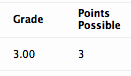
I scored a 46.5/50 (93%) on the first midterm, which is OK but not great. Ironically, I got all the economics right but flubbed some of the algebra.

I'm finding Micro Theory to be a bit dry. I suppose that should come as no surprise, since it's really just a rehash of Micro Principles but with more math. I'm eager to get on to some of the upper-division electives.

The second midterm is in two weeks. The last day of class is May 7.

Monday, March 1, 2010

Hal Varian speaks!

Well, writes! This time, on Computer Mediated Transactions. Set ye your coffee down and read and become smarter.

Wednesday, February 24, 2010

Tell me more lies

I was so hungry I ate until my stomach hurt, at which point I realized I had actually been thirsty. Tell me again about rational consumers.

First micro theory test is in the books

I hate this part. The waiting. The nagging self-doubt. The creeping suspicion that I didn't do nearly as well as I thought I did.

I've said it before and I'll say it again: I am willing to pay money—good money—to get my grade back faster. Surely there's no conflict there, and the TA's could undoubtedly use the money. Maybe I'll talk to the department about that.

Anyway, right now I think I did well. That estimate will steadily decrease until I actually get my grade back. By next week I'll be convinced I totally screwed the pooch. Since I know that I suppose I can discount it.

Monday, February 15, 2010

Scott Adams on the econoclypse

From his blog post Shiny Objects:

If things go so badly that the S&P 500 becomes permanently worthless, I have a hard time believing that the people who own gold will rule the world. I think it's more likely that the people who own steel that is conveniently shaped like guns will control everything, including all of the shiny rocks. At that point, the new currency will be something along the lines of "Wash my car and I won't shoot you in the leg."

Monday, February 8, 2010

Friday, February 5, 2010

Despair, Inc. on economics

economics03.jpg

HT

Uwe Reinhardt: 'If Colleges Worked Like Health Care'

Great post by one of my favorite economists, Uwe Reinhardt, in the New York Times' Economix blog:

That'll be $125 for reading Chapter 3. They would be stunned not only by the sheer length of the invoice and the total amount billed, but also because so many line items would be expressed in either Latin or Greek and thus be completely incomprehensible to most parents. Upon requesting a fee schedule from the dean of the college, the latter would patiently explain that different prices had been negotiated with different parents and that all of those fees are proprietary information.


Read the whole thing. So true.

Thursday, February 4, 2010

Omni apps help me be the biggest nerd in the class

ogs.png I know I sound like a broken record going on and on about OmniGraphSketcher, but it really is an essential tool for econ students. At least ones who refuse to turn in hand-written homework.

But I thought I'd mention the other Omni app that helps me remain King of Nerd Mountain: OmniOutliner.

oo.png I take notes (admittedly handwritten) during class and then organize them into an outline using this awesome app. It does all the normally outliney stuff, which makes it great for organizing hierarchical information. And come test time, I just bust out the One Outline to Rule Them All and kick some ass.

So, thanks, Omni.

Tuesday, January 26, 2010

Monday, January 25, 2010

Electronic textbooks FTW!

My new micro theory class uses a different textbook than does the one I just dropped. I was about to head over to Amazon to order the new one when I saw this notice on the course's Blackboard page:

Ebook program

This class participates in a pilot scheme, sponsored by the publisher Wiley, for free electronic download of the textbook. Instructions may be found under "Course Documents".


I installed the OS X version of the reader (VitalSource Bookshelf), downloaded the textbook, and voilà!

eTextbook

That's $131.61 I don't have a pay and 3 pounds I don't have to carry around. Nice!

Now I'm even more interested to see what Apple announces on Wednesday. Electronic textbooks could be a killer app for a tablet.

Friday, January 22, 2010

Failing fast

In the startup world "failing fast" is a good thing. The idea is that if you're going to fail, it's best get it over with quickly so you can move on and try something else.

This morning Dr. Slesnick arrived to class a few minutes late, spent about fifteen minutes having each student affirm in writing that he understood the "contract for this class" (no makeup exams, no sleeping in class, etc.), and then announced that he had intended to lecture but that he couldn't find a dry erase marker and that therefore class was over.

Wait, what?

I'm trying to imagine someone in any other setting calling a meeting of 60 people and then canceling the meeting on the spot because he didn't have a pen and didn't care to look for one.

Today is the last day of the official add/drop period. I'll be dropping Dr. Slesnick's class. I give people exactly one chance to waste my time.

I'm going to head back down to campus for the 1:00p meeting of Dr. Watson's 420K class, and may add it depending on my conversation with him. I'll also be sending Dr. Slesnick an email suggesting he add one point to his "contract": that he will put some minimal amount of effort into not wasting his students' time.

I am glad about one thing. At least Dr. Slesnick failed fast.

Update: I dropped Slesnick's class and added Watson's. I composed an email to Slesnick but on the sage advice of a friend am going to sleep on it before sending.

Update 2: After sleeping on it, I've decided not to send the email I drafted. Bygones.

Great Moments as a 40YOF #3

Yesterday I got a calculus refresher from a tutor who was born the year I last took calculus.

Wednesday, January 20, 2010

Whoa!

Well I can say I've never had a first class meeting like that before. Dr. Slesnick spent about an hour emphasizing how difficult the class will be, how there will be no quarter given, and how each one of us should seriously consider dropping it while we still can.

He reminded me a little bit of John Houseman's Kingsfield character in The Paper Chase, but younger and more intense. (Will I be Hart or Kevin? Yikes.)

So after class I beat a path to the UT Learning Center to sign up for a calculus tutor to help knock the rust off my differentials and integrals.

My kids don't understand about grades. Instead, they think you either "win" or "lose" each class, and the only person who wins is the one who does the best. Everyone else loses.

By that definition, I've won every economics course I've taken so far at UT. Looks like winning this one is going to be an interesting challenge.

Back in the saddle

This morning at 9:30 I begin my Micro Theory class, about which I'm both excited and a little nervous. I'm excited because I'm fascinated by microeconomics, and the principles class left me wanting more. I'm nervous because this class requires some knowledge of calculus, which I haven't studied since, oh, about 1989.

If Dr. Slesnick doesn't go in class over exactly how much calculus we'll need, I'll talk to him about it at his office hours. I knew that stuff pretty well once upon a time so hopefully it won't be hard to do a refresh.

This is going to be a busy semester. I'm only taking one class, but we have our third product in development, and our business selling and supporting the first two continues to grow rapidly. Never a dull moment. :-)

Monday, January 18, 2010

Tell me again why the Co-op exists

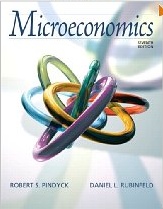
Microeconomics (7th Edition) (Hardcover) $187.75 (including tax) from the Co-op.

$143.54 (including one-day shipping!) from Amazon.

Update: I wish I were a Kindle person so I could buy the Kindle version for $90.02. Come on, Apple, tablet up already!

Update 2: Third-party sellers on Amazon list the same book starting at $95.00.

Monday, January 11, 2010

On not knowing

People don't know what they want and firms don't know what they have.

As I progress in my Economics education, I assume that the idea of imperfect information will be increasingly incorporated into the models I study. But I wonder whether this idea—that no one knows how much satisfaction a product or service will produce—will come into play.

Obviously, people guess and firms guess, and their guesses intersect at some sort of equilibrium. But when markets are small, say, when one big company wants to buy another one, the guesses can be disastrously wrong.

Individuals make these kind of guesses all the time, and they can be just as wrong. But they can probably improve their chances of getting something that ultimately delivers high satisfaction if they use the collective experience of the market. So they buy what everyone else is buying.

It's not a bad strategy if you don't know what you want and you don't know what you'll get. But that's how you wind up eating at McDonald's wearing Gap jeans and driving a Camry. Or, for that matter, eating at Nobu wearing Prada and driving an S500.

So the key, I think, and this is I'm sure totally obvious to everyone else but me, is to know what you want and know what you'll get.

What do you want? I'm going to give that question some thought.

Thursday, January 7, 2010

Kedrosky on traditional vs. behavioral economists

From One Economist to Rule Them All by Paul Kedrosky:
After all, if we concede that traditional economists are historians with a math fetish, then behavioral economics are mathematicians with a psychology fetish. Either way, I don’t feel any more comfortable handing them the keys to the financial kingdom.

Tuesday, December 29, 2009

The economics of Google Reader, and the $250K Mac

This post from Austin Frakt at The Incidental Economist looks at the producer and consumer surplus of Google Reader, and makes an important point (albeit using made-up numbers) about how value can be created on both sides of a transaction, even for a free product.

My favorite example of consumer surplus is my computer. I paid around $2,000 for my MacBook Pro, plus maybe $1,000 more for third-party hardware and software. But I would have paid much more—probably somewhere between the prices of my car and my house—if no substitutes were available. (It's hard to say that given what I know about how much computers "should" cost, but if I look at it rationally I can see the enormous value I derive from my computer.) The consumer surplus is off the charts.

As Austin writes,

Given the enjoyment and convenience obtained by the multitude of products we use it’s a wonder how little of that full value we actually pay. The rest is consumer surplus.


Given how I use my car and my computer, the computer should cost more. In a world with zero consumer surplus (where each supplier was a perfectly price-discriminating monopolist) my car would cost about what it did but my MacBook would cost, I would guess, around $250,000.

Thankfully we don't live in that world.

Saturday, December 19, 2009

Comparing the House and the Senate health care bills

The New York Times has a good comparison of the House and Senate health care reform bills that will go to committee to be reconciled, assuming the bill before the Senate passes as expected.

Tuesday, December 15, 2009

Nate Silver on Greg Mankiw

From Greg Mankiw, Stimulus Critic: So Wrong He's Actually Right on FiveThirtyEight: Politics Done Right:

So, to summarize: Mankiw is wrong that the stimulus consists mostly of Keynesian-type investments. So far, it has been closer to the tax cut end of the spectrum. But he's also wrong that the stimulus is not working. By the benchmark that he implicitly endorses -- GDP -- it's done very well. Mankiw is so wrong, in other words, that he may actually be right: the stimulus looks a lot like one he might have designed, and it's helping the economy.


HT Paul Kedrosky

Monday, December 14, 2009

Who's to blame for the public's health care ignorance?

In a letter quoted in the New York Times Stanford health economist Victor Fuchs concludes that the public is ignorant about not only health care reform but also the health care system itself:

Despite all the media coverage (or maybe because of it), most of the public has a very limited understanding of the health care system and health policy. They think the insurance companies are the main problem. They think an employer mandate is a good idea because employers pay for care. They want to control cost, but oppose every policy that might do that except for thinking that drug company and insurance company profits are too high. They say they want everyone to have access to care but only one in four favors an individual mandate.


While doing research for my paper about the now-defunct pubic option, I read a lot of the media coverage of the various reform proposals. My conclusion was that even the most thoughtful, analytical sources (to say nothing of the carnival barkers masquerading as newsmen) fail to lay out the issues simply and clearly.

Maybe it's because no one wants to pay attention long enough to understand our health care system, what's wrong with it, and how it might be fixed. It's not terribly sensational. Maybe it just can't compete for our attention with the titillating infidelities of sports heros. But the public can't bear all of the responsibility for its own ignorance.

Even if people were paying attention, they'd be hard-pressed to find the basic facts.

Amazon's new spot market for compute

Amazon Web Services just introduced a spot market for computing resources. I love seeing economics so purely expressed in the real world. If Amazon ever spins off AWS as a separate company (or even a tracking stock) I'll be all over it.

Saturday, December 12, 2009

Charlie dominates the dojo

Last night I got my final health econ grades: a 94 on the final exam, a 97.34 uncurved average, a 100 after the curve, one of three "honorary" A+ class grades awarded, and in fact the highest grade in the class. So that's nice. I opted out of the macro final, so I kept my 99.25 average in that class. Which is also nice.

But I find I'm ambivalent about my grades. On one hand, I've done well. On the other hand...


Tuesday, December 8, 2009

Measuring the distance to the goal

My Health Econ final is tomorrow night. (Yes, night. 7-10p. Dude! Anyway...)

I like to know how I need to perform in order to make my A. So, curves aside, here's the math:

Requirement   Possible   Actual   
Problem Sets1514.3
Exam 12019.8
Exam 22020
Policy Paper1515
Final Exam30?
Total10069.1


Since time immemorial, UT has awarded only whole-letter grades for classes (A, B, C, D, and F). But starting this semester they're adding + and - into the mix, albeit with no A+ possible, so the bar for an A just rose from 90 to 93. Bummer.

Therefore for an uncurved A I need 93 points total, or an additional 23.9 points out of a possible 30, which means a 80 or better on the final. (For an uncurved A-, which is not what I want, I need a 70 or better on the final.)

Wish me luck.

Reading for the Christmas break

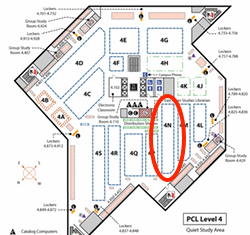
PCL-4N.gif Greg Mankiw's students' favorite book from his freshman seminar reading list was Milton Friedman's Capitalism and Freedom, so I'm adding that to my reading list for the Christmas break. Thanks, Greg Mankiw's students.

Note to self: HB 501 PCL 4N

Friday, December 4, 2009

Uwe Reinhardt on moral hazard and war

From Paying for Health Care (and War, by the Way) by Uwe Reinhardt:
"Moral hazard" is a term commonly applied to certain financial contracts, under which one party is obliged to pay another money if a specified event (e.g., illness or a fire or an accident) occurs. The term refers to situations in which the very existence of the contract alters the behavior of one party, so that it increases the probability of the event's occurrence or the size of the monetary payoff based on that event, or both.

In the context of health care, having an insurance plan will increase the likelihood that a person will actually use the health care system. It will also probably increase the resource-intensity of the treatments chosen by patients and physicians. Some economists even theorize that such coverage encourages unhealthy lifestyles and reckless behavior.

In the context of the wider financial sector, the now openly demonstrated willingness of our government—whether it be the Bush or the Obama administration—to make taxpayers bear the financial risk of serious mismanagement or risk within the private financial sector is likely to bring about the moral hazard of future mismanagement. Much has been written about that threat.

My point in the op-ed article was that the term "moral hazard" can also be applied to the contingency of war and its cost.

If the monetary and the blood cost of war are shifted mainly to citizens other than the elites who are empowered to declare war and decide how it is conducted, I argued, then that elite is more likely to embrace war and to spend on it.


The best definition I've heard for "moral hazaard" is "overconsumption due to artificially low prices". Most people in our society, myself included, pay an artificially low price for war, so we consume more than we would at equilibrium.

In my health econ class, we've looked a lot at moral hazard as it relates to insurance. It's interesting to note the more general applciation.

Thursday, December 3, 2009

Look! There's a $20 U.S. Federal Reserve Note on the ground!

From The Efficiency of Silver Coins by The Incidental Economist:
There is a famous joke about economists: Two economists are walking to the beanie propeller hat shop. One says, "Look! There's a $20 U.S. Federal Reserve Note on the ground!" (remember, he's an economist). The other says, "Can't be. If that were true, someone would have already picked it up." They walk on, leaving the $20 bill on the ground.

The joke is about the efficiency of markets. In an efficient market opportunities to systematically make profits above the market average don't exist. Any news that suggests a profit opportunity is taken advantage of nearly instantly and the extra profit is arbitraged away. The $20 is gone. It can't be there. Don't bother looking for it. This is the efficient market hypothesis (EMH) in a nutshell.

Considering the utility of that last .75 points

Going into my macro final I have a grade of 99.25/100. I have the choice of skipping the final and keeping that grade or taking the final and possibly raising my average to 100. (If I were to score 100 on the final I could drop my grade for Exam 2, which was 97. If I were to score under 97 on the final, that grade would be dropped and my average would be unchanged.)

Now I have to consider the costs and benefits of studying for and taking the final. I've been thinking I would take it, since that would make the study for it, which would help cement the things I've learned this semester into my brain. I'm still leaning that way. But I have a long to-do list at work and a looming deadline, so the opportunity cost of studying is high, and could be huge if I were to miss my deadline.

The potential grade difference isn't significant to me, so instead of using the final exam as a forcing function I think I'll work instead and commit to thoroughly reviewing the material after I'm over the hump at work, which will be around the end of January.

Still, it would be nice to have a perfect 100 average...